

Understanding property tax differences between Williamson and Travis counties can help buyers better estimate homeownership costs.
Buying a home in Williamson or Travis County means paying property taxes to several local entities, not just the county. Since Texas has no state-level property tax, your exact address determines which county, school district, city, and special district taxes will apply.
Some homes also come with Municipal Utility District (MUD) taxes or Public Improvement District (PID) assessments that help fund infrastructure and services.
Here’s how Williamson County property taxes compare with those in Travis County, how MUDs and PIDs affect what you pay, and what to check before making an offer.
Table of Contents:
- What makes up your property tax bill?
- What is a Municipal Utility District, and how does it affect your property taxes?
- What is a Public Improvement District, and how is it different?
- Different property tax rates in action
- How to check a home’s property taxes before making an offer
- FAQs about MUDs, PIDs, and property taxes near Austin
- Make an informed real estate decision with The Core Residential Group
What makes up your property tax bill?
A home in Williamson or Travis County can be subject to several property taxes:
- County taxes – Fund county services and infrastructure.
- School district taxes – Support the independent school district (ISD) serving the address, such as Leander ISD, Liberty Hill ISD, Austin ISD, or Round Rock ISD.
- City taxes – Apply to homes within a city’s taxing jurisdiction, such as Cedar Park, Leander, Austin, or Round Rock.
- Special district taxes – Can include taxes levied by MUDs, emergency services districts, community college districts, and other applicable districts.
Each taxing entity sets its own rate, typically expressed as an amount per $100 of taxable property value. For example, if a property’s total tax rate is $2.00 per $100 of taxable value, that equals 2%. On a home with a taxable value of $400,000, the estimated annual property tax would be $8,000.
Important note on the example above: This hypothetical assumes the same taxable value applies to every taxing entity. Exemptions can reduce that value by different amounts for different entities. Learn more in the Texas Comptroller’s guide to property taxes.
What is a Municipal Utility District, and how does it affect your property taxes?
A MUD is a local government entity that provides services such as water, wastewater treatment, and drainage within its boundaries. It can issue bonds to finance infrastructure and levy property taxes to repay that debt and fund operations.
What MUD taxes mean for homeowners
If you buy a home within a MUD, you’ll be paying district property taxes on top of other local taxes. While a higher MUD tax isn’t necessarily a dealbreaker, it’s an expense you’ll want to factor into your budget when comparing homes.
Keep these things in mind:
- MUD rates vary. Each district sets its rate based on debt and operating costs.
- Rates may change. Taxes may decrease as debt is repaid, but reductions aren’t guaranteed.
- Utility bills are separate. You’ll still pay for water and sewer services.
- Boundaries matter. Neighboring subdivisions may have different MUD tax obligations.
If you’re considering newer developments around Leander, Liberty Hill, or northwest Austin, check whether the property falls within a MUD.
What is a Public Improvement District, and how is it different?
A PID is an area established by a city or county to fund improvements or services that specifically benefit properties within its boundaries. Those improvements can include roads, sidewalks, parks, landscaping, and utility infrastructure.
For buyers comparing MUD vs PID assessments in Texas, the key distinction is how the charges are calculated: MUDs can levy property taxes based on taxable value, while PID assessments allocate improvement or service costs to benefiting properties.
What PID assessments mean for homeowners
A PID assessment is an additional ownership expense, even when it appears on the same statement as your property taxes. Before buying, keep these points in mind:
- Payment schedules vary. Some assessments are paid in annual installments. Request the current amount, remaining payment schedule, and any payoff options.
- A sale doesn’t automatically clear the balance. If the assessment remains unpaid, future installments can become the buyer’s responsibility.
- Property tax exemptions don’t reduce the assessment. A homestead exemption, for example, won’t lower the PID charge.
- The obligation must be disclosed. Texas law requires sellers to provide the applicable PID notice before a buyer enters a binding purchase agreement.
Before closing on a home purchase, confirm the annual payment, outstanding balance, and prepayment options. See Texas Property Code, Section 5.014 for disclosure requirements.
Different property tax rates in action
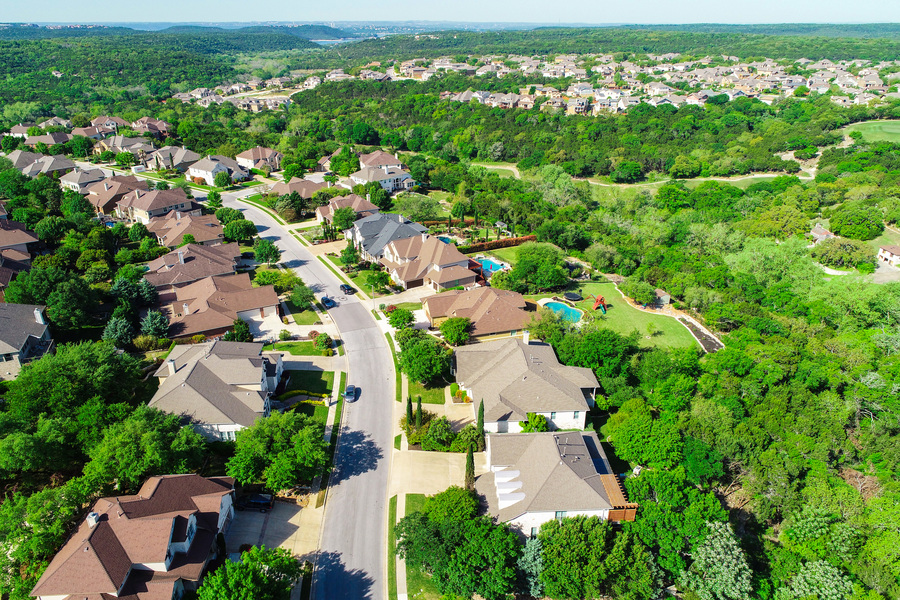
Cedar Park is located primarily in Williamson County, with portions extending into Travis County.
Consider two homes, each priced at $500,000. For this illustration, assume both also have a taxable value of $500,000 for every taxing entity, with no exemptions.
| Home A | Home B | |
|---|---|---|
| Combined property tax rate | 1.8% | 2.4% |
| Annual property taxes | $9,000 | $12,000 |
| Monthly amount to budget | $750 | $1,000 |
Home B’s property taxes cost $3,000 more per year, or $250 more per month, despite the identical purchase price. Different school district, city, or special district rates can produce that gap.
That said, remember these are hypothetical rates, not quoted totals for Williamson or Travis County. PID assessments, HOA dues, and homeowners insurance are additional expenses to include when comparing the full cost of owning either home.
For more information on rates, check the official Williamson County tax rates and Travis County tax rates.
How to check a home’s property taxes before making an offer
Before making an offer, take a closer look at the property’s tax obligations. The amount shown on a listing or previous tax bill may not reflect what you’ll actually pay, especially if the seller has exemptions or the home is newly built.
Here are five steps to help you verify the details and get a more accurate estimate of your costs.
1. Look up the property’s appraisal record. Start with the Williamson Central Appraisal District or Travis Central Appraisal District, depending on the address. Search for the property and review its appraised value, exemptions, and listed taxing jurisdictions.
2. Identify every taxing entity. Check whether the property falls within city limits, which school district serves it, and whether any special district taxes apply. Don’t rely solely on the listing description or neighborhood name to identify the applicable taxes.
3. Review current rates and exemptions. Use the county’s official tax resources to confirm the latest adopted rates. If you’re planning to make the home your primary residence, check your eligibility for a residence homestead exemption.
4. Ask about MUD vs PID assessments in Texas. For a home in a MUD, review the current district tax rate. If there’s a PID, request the assessment information, including the outstanding balance and annual payment requirements.
5. Calculate the cost based on your circumstances. Ask your lender to calculate payments using the applicable taxes and assessments. For new construction, remember that previous tax bills may reflect only the land’s value. Review the property’s tax history, but don’t assume last year’s bill reflects what you’ll pay.
FAQs about MUDs, PIDs, and property taxes near Austin
Are property taxes higher in Williamson County or Travis County?
In 2026, Williamson County’s combined county and road tax rate is $0.421547 per $100 of taxable value, compared with Travis County’s county rate of $0.386210.
Those figures cover only the county-level charges. They don’t establish which home will have the lower total bill: school district, city, and special district taxes, along with applicable exemptions, can change the comparison.
Can a home have both MUD taxes and PID assessments?
Yes. A property can be subject to both if it falls within the applicable district boundaries. MUD taxes and PID assessments serve different purposes and have different payment structures. Check both obligations before buying, especially in newer developments where infrastructure financing may be part of the community’s costs.
Can my property tax bill increase even if the tax rate falls?
Yes. A lower rate can still produce a higher bill if your taxable value increases enough to offset the reduction. Changes to exemptions or the addition of another taxing entity can also affect what you owe. Compare the taxable values and individual charges on each year’s statement, rather than looking only at the combined rate.
Make an informed real estate decision with The Core Residential Group
Property taxes can make a big difference in what you pay to own a home, especially when comparing neighborhoods across Williamson and Travis counties.
Whether you’re buying in Cedar Park, Leander, Liberty Hill, or nearby communities, The Core Residential Group brings over 45 years of combined industry experience to help you compare properties, understand local tax obligations, and find a home that fits your budget.
Give us a call at 512.636.0834 or send us an email to schedule your free consultation.